Is Nashville a Good Place to Live in 2026? (Honest Guide)
If you’re considering a move to Middle Tennessee, one of the most common questions is simple:
Is Nashville a good place to live in 2026?
The short answer for many relocation buyers is yes — but the right answer depends on your lifestyle, income level, career goals, and expectations.
Nashville has experienced significant growth over the past decade. The city continues to attract professionals, families, entrepreneurs, and remote workers from across the country — especially from high-cost states.
Here’s a realistic breakdown of what living in Nashville looks like today.
Why So Many People Are Moving to Nashville
Nashville isn’t just a music city anymore. It has evolved into a diversified economic hub with expanding job sectors and strong population growth.
Major drivers of in-migration include:
- No state income tax
- Growing healthcare and tech industries
- Expanding corporate presence
- Central geographic location
- Strong real estate appreciation trends
- Lifestyle flexibility (urban + suburban + lake living)
While growth has normalized compared to peak relocation years, Nashville remains one of the more attractive mid-sized metros in the Southeast.
Cost of Living in Nashville
Compared to high-cost coastal cities, Nashville remains more affordable — though it is no longer a “cheap” city.
See our full comparison of Nashville vs California income taxes to understand how tax structure impacts take-home pay.
Property ownership costs vary as well — review our breakdown of property taxes in Nashville vs California before budgeting.
Housing
Home prices have increased over the past several years, but compared to cities like Los Angeles, San Francisco, or New York, Nashville offers significantly more purchasing power.
Housing affordability is a major factor for relocation buyers, which is why reviewing Nashville vs California home prices is essential before making a move.
Buyers relocating from California often find they can:
- Buy larger homes
- Move into suburban communities with more space
- Purchase newer construction
- Improve overall lifestyle affordability
Taxes
Tennessee does not have a state income tax on wages. For many professionals, this increases take-home income.
However, Tennessee relies more heavily on sales tax, so consumption-based taxes are higher than in some states.
Utilities & Everyday Expenses
Utilities, groceries, and services generally track near national averages, though inflation has affected all major markets.
Overall, Nashville offers moderate cost-of-living advantages compared to coastal metros, especially when factoring in income tax savings.
Job Market & Economic Stability
Nashville’s economy is not dependent on one single industry.
Major employment sectors include:
- Healthcare (HCA, Vanderbilt, hospital networks)
- Finance and banking
- Technology and startups
- Logistics and distribution
- Education
- Tourism and hospitality
Unemployment rates have historically remained competitive compared to national averages.
The healthcare sector in particular provides long-term economic stability for the region.
For remote workers, Nashville’s lifestyle and tax structure are especially attractive.
Quality of Life in Nashville
Lifestyle Balance
Nashville offers a unique blend of:
- Urban energy
- Suburban comfort
- Outdoor recreation
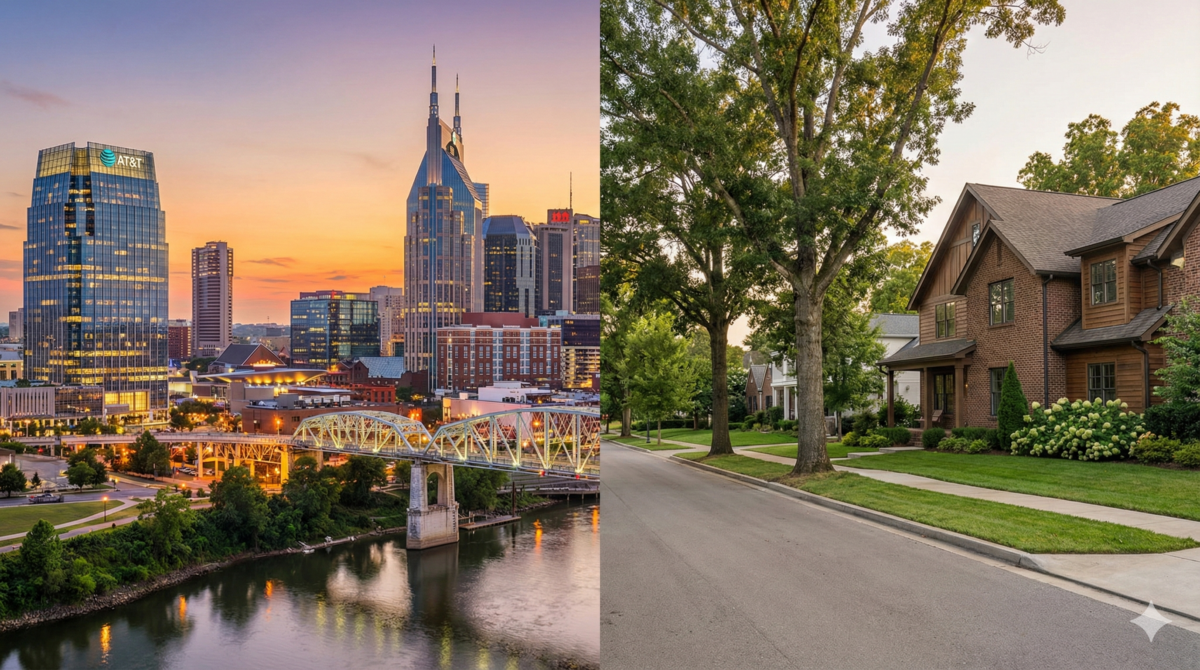
Residents can live downtown, in walkable neighborhoods like 12 South or East Nashville, or in quieter suburban areas such as Brentwood, Franklin, Mount Juliet, or Hendersonville.
Lake living around Old Hickory Lake is another popular option for buyers seeking waterfront access without coastal pricing.
Entertainment & Culture
Nashville continues to grow culturally beyond music.
You’ll find:
- Professional sports teams
- Expanding restaurant scene
- Live entertainment venues
- Festivals and outdoor events
- Growing arts communities
While it’s not New York or Los Angeles in scale, it offers strong lifestyle appeal for a mid-sized metro.
Climate & Weather
Nashville has four distinct seasons.
Summers
- Hot and humid
- Thunderstorms possible
Winters
- Generally mild
- Occasional snow events
For buyers relocating from California, humidity and seasonal storms are an adjustment.
However, Nashville avoids extreme cold seen in northern states.
Traffic & Infrastructure
Rapid growth has increased traffic congestion in certain corridors:
- I-65
- I-24
- Downtown commuter routes
Public transportation remains limited, and Nashville is largely car-dependent.
For buyers prioritizing short commutes, neighborhood selection is critical.
Working with a local expert helps minimize commute frustration.
Safety & Community
Like any growing metro, safety varies by neighborhood.
Suburban communities such as Brentwood and Franklin consistently rank among the safest in the region.
Urban areas offer vibrant culture but require smart location planning.
Choosing the right neighborhood is often more important than judging the city as a whole.
Real Estate Market Outlook
The Nashville housing market has matured.
While explosive appreciation years may have cooled, long-term fundamentals remain strong:
- Continued in-migration
- Corporate expansion
- Healthcare stability
- Geographic centrality
- Land availability in surrounding counties
Inventory levels fluctuate by price point and season.
Competitive neighborhoods still move quickly, particularly in desirable suburbs.
Who Thrives in Nashville?
Nashville tends to be an excellent fit for:
✔ Families seeking suburban space
✔ Remote professionals
✔ Healthcare and tech workers
✔ Entrepreneurs
✔ Buyers relocating from high-tax states
✔ Investors looking for stable growth markets
It may be less ideal for:
- Individuals seeking ultra-dense city life
- Those dependent on extensive public transportation
- Buyers expecting extremely low housing prices
Pros and Cons at a Glance
Pros
- No state income tax
- Strong job sectors
- Central U.S. location
- Suburban lifestyle options
- Lake living availability
- Growing economy
Cons
- Traffic congestion
- Rising home prices
- Car-dependent infrastructure
- Hot, humid summers
No city is perfect — but Nashville continues to offer a compelling balance for many buyers.
Is Nashville Still Growing in 2026?
Yes.
While growth has stabilized compared to peak pandemic migration years, Nashville continues to attract steady relocation from:
- California
- Texas
- Florida
- Illinois
- New York
Long-term population projections remain positive.
Growth is expected to continue in surrounding counties as well.
Final Verdict: Is Nashville a Good Place to Live?
For many relocation buyers in 2026, Nashville represents:
- Financial flexibility
- Lifestyle balance
- Career opportunity
- Long-term real estate potential
It is not the cheapest city in America.
It is not the most walkable metro.
But for families, professionals, and entrepreneurs seeking a balanced lifestyle with strong economic fundamentals, Nashville remains a solid choice.
The key is choosing the right neighborhood, price point, and long-term strategy.
Considering a Move to Nashville?
If you’re evaluating whether Nashville is the right fit, I can help you compare:
- Neighborhood options
- Commute patterns
- Pricing expectations
- Tax structure
- Long-term investment outlook
Nik Shewmaker (Nashville’s Nik)
📲 (615) 585-0022
📧 NashvillesNik@gmail.com
🌐 www.NashvillesNik.com